
Jewelry Discoveries Revealed in 2025
Hidden beneath ancient cities, forest floors, and sacred landscapes for thousands of years, these remarkable jewelry discoveries—newly revealed in 2025—prove that the past still has stories waiting to shine.

Unearthed and Unveiled — Jewelry & Treasure Discoveries of 2025
Step into a year where the past continued to shine brighter than ever. From prehistoric ornaments reexamined with modern science to long-buried treasures finally brought into public view, 2025 revealed extraordinary jewelry stories that reshaped our understanding of ancient cultures and craftsmanship. Some discoveries were freshly unearthed, while others—found years or even decades ago—were newly analyzed, documented, and shared with the world for the first time.
Together, these revelations offer a rare glimpse into how jewelry has symbolized power, belief, identity, and artistry across millennia. Join us as we uncover the most remarkable jewelry discoveries and revelations that captured global attention in 2025.
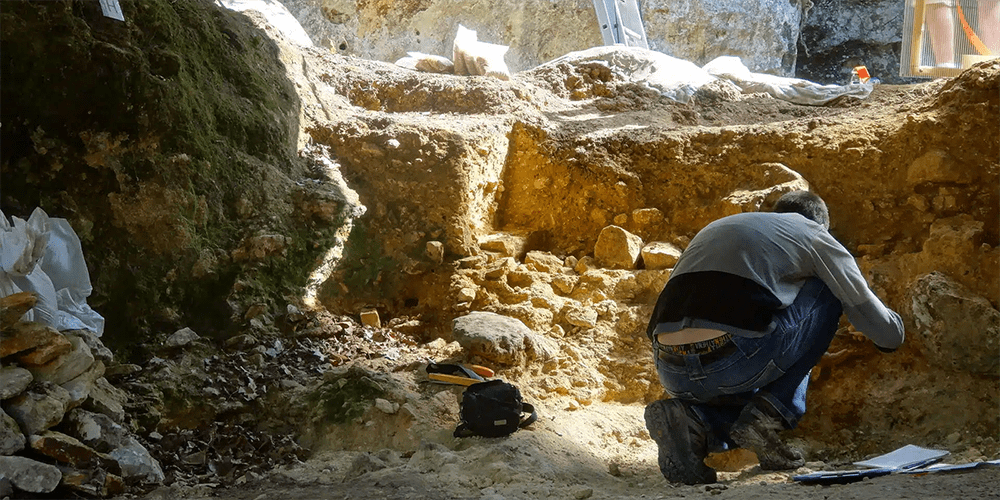
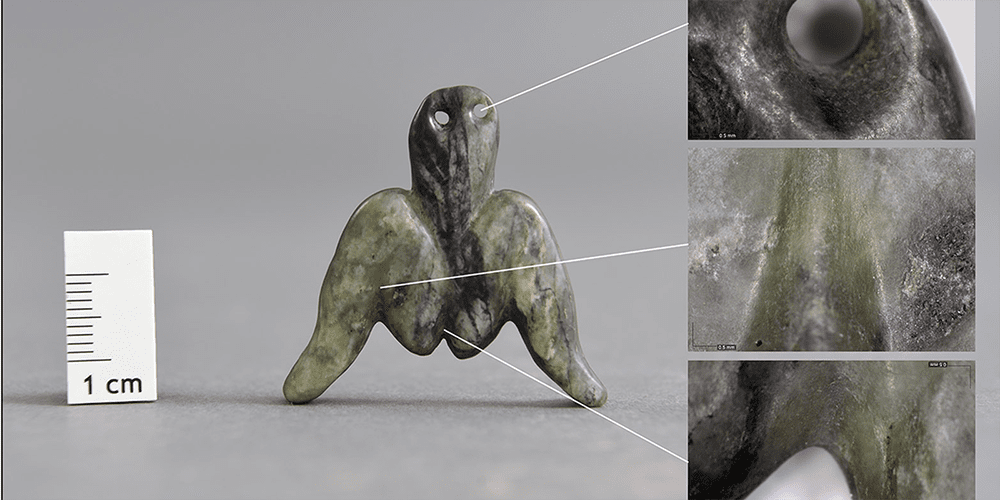
Neolithic Nephrite Pendant Revealed at Serbia’s Svinjarička Čuka
A rare jade-like ornament sheds new light on symbolic jewelry and long-distance exchange in Neolithic Europe
Researchers in southern Serbia have brought renewed attention to a rare jade-like pendant from the Neolithic site of Svinjarička Čuka, a settlement first identified during archaeological surveys in 2017. Discovered at the corner of a large house dated to around 5600 B.C., the symmetrical pendant—approximately 1.5 inches wide—is carved from green nephrite and is believed to depict a frog-like female figure in a birth-giving pose.
While Neolithic figurines are common at the site, researchers note that this stone pendant is unique in Serbia, with wear traces suggesting it was worn suspended by soft straps. Although the object was excavated earlier, its significance, material analysis, and cultural context were formally revealed and updated in 2025 through newly published research, shedding fresh light on long-distance material networks and symbolic jewelry traditions in the central Balkans over 7,600 years ago.
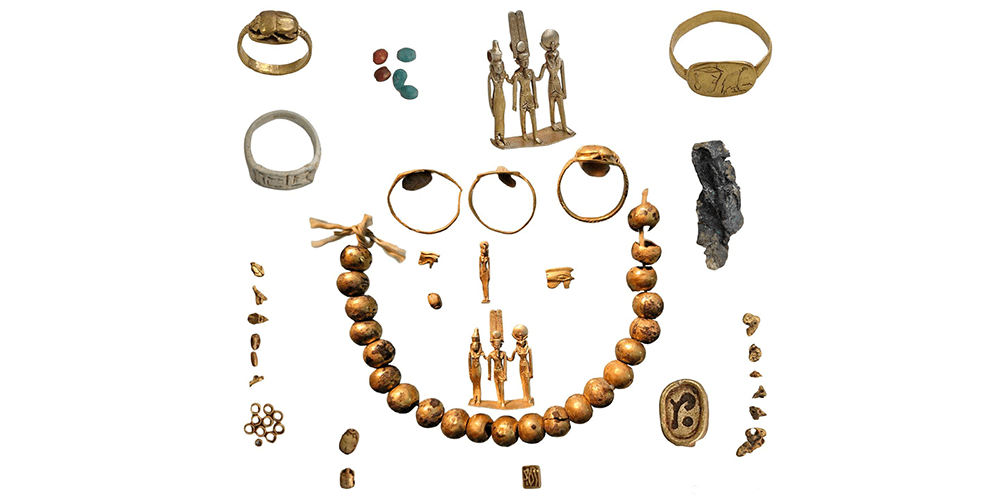
Dynasty 26 Jewelry Hoard Revealed at Karnak Temple
Gold rings and sacred amulets illuminate religious life in Egypt’s Late Period
Archaeologists revealed new details about a 2,500-year-old jewelry collection dating to Egypt’s Dynasty 26, uncovered within the Karnak Temple complex in Luxor. The artifacts were originally discovered during excavations in February 2025 by a joint Egyptian–French mission, when a small, intact pottery vessel was found carefully buried within the temple’s northwestern sector. Inside were finely crafted gold rings, deity amulets, a metallic brooch, and numerous beads—some gold-plated—with a standout golden amulet depicting the Theban triad of Amun, Mut, and Khonsu.
After being concealed for more than two millennia, the jewelry’s materials, iconography, and ritual significance were formally revealed and documented in 2025, offering rare insight into late-period religious practices, personal adornment, and the enduring symbolic role of protective jewelry in ancient Egyptian society.
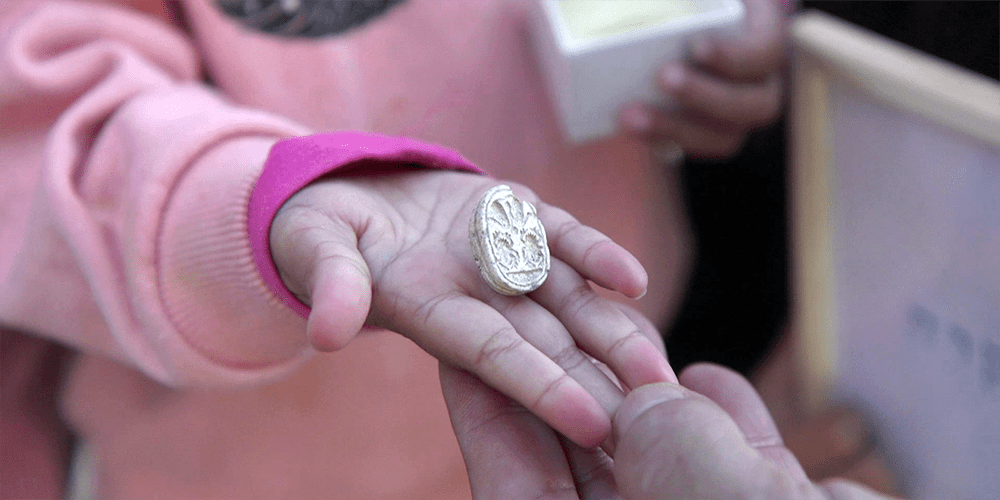
Middle Bronze Age Scarab Amulet Revealed at Tel Azekah
A child’s accidental find uncovers ancient beliefs and Egyptian influence in the Levant
New details about a 3,800-year-old scarab amulet uncovered at the archaeological site of Tel Azekah in southern Israel were recently unveiled. The jewelry discovery was made in early March 2025, when a three-year-old child picked up the small, carved object during a family visit to the site, later bringing it to the attention of the Israel Antiquities Authority. Identified as a Middle Bronze Age artifact dating between roughly 2100 and 1600 B.C.E., the scarab-shaped amulet reflects Canaanite craftsmanship influenced by ancient Egyptian symbolism, where such pieces were worn as protective charms or used as seals.
Although the amulet lay buried for nearly four millennia, its historical significance, cultural context, and connection to long-standing trade and religious ties between Canaan and Egypt were formally revealed and shared with the public in 2025, offering fresh insight into personal adornment and belief systems of the ancient Levant.
Dacian Silver Jewelry Hoard Revealed in Transylvania
Elite adornments provide the first physical evidence of Dacian presence in the region
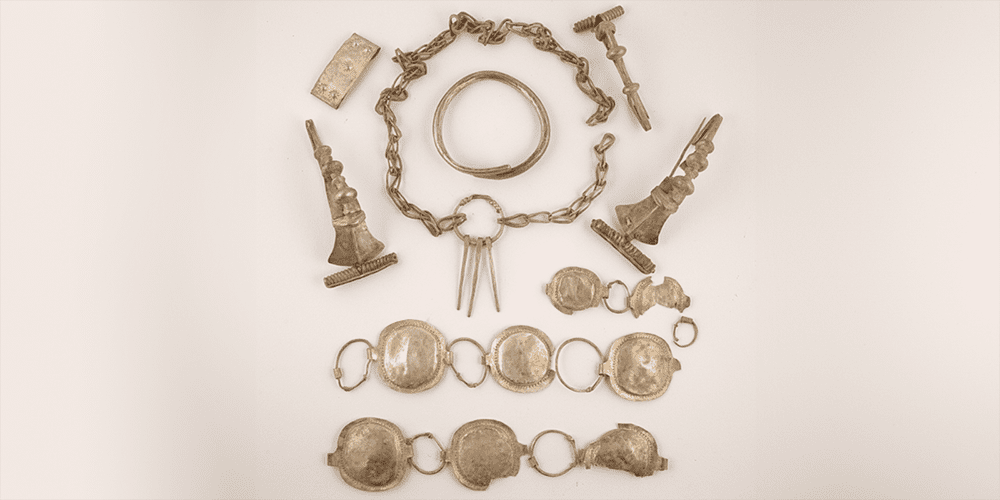
A centuries-old hoard of Dacian silver jewelry discovered near the town of Breaza in Transylvania has emerged as one of the region’s most significant archaeological finds. The original discovery was made in early 2025, when two metal detectorists unearthed an assemblage of silver adornments dating to between the 1st century B.C.E. and the 1st century C.E., a period when the Dacian people inhabited the region prior to Roman conquest. The collection includes silver brooches, a bracelet decorated with plant motifs, a chain necklace, and a belt composed of circular pendants engraved with solar symbols—together weighing approximately 550 grams.
While buried for nearly two millennia, the jewelry’s cultural significance, aristocratic associations, and potential ritual purpose were formally revealed and documented in 2025, following confirmation of its origins by the Mureș County Museum, offering the first physical evidence of a Dacian presence in this part of Transylvania and reshaping understanding of the region’s ancient settlement history.
Early Hellenistic Gold Rings Revealed at Jerusalem’s City of David
Child-sized rings point to coming-of-age rituals and unexpected wealth in ancient Jerusalem
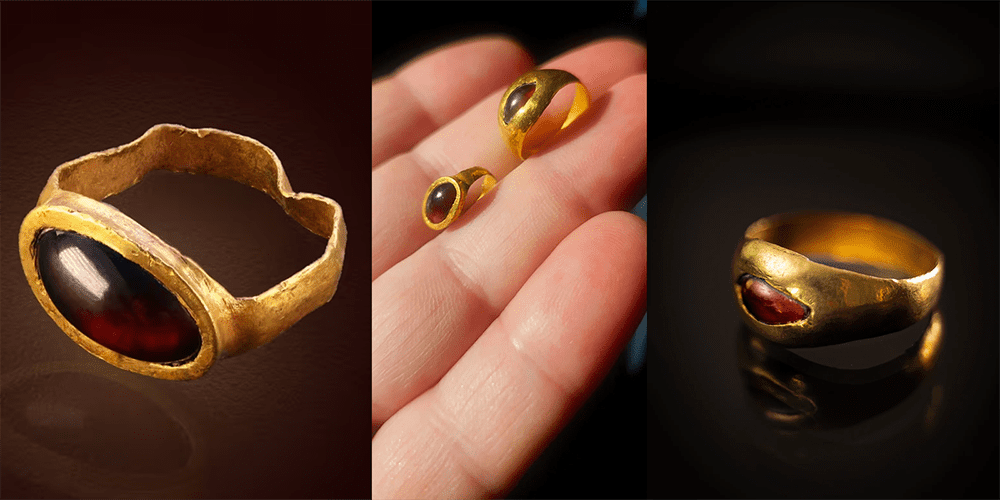
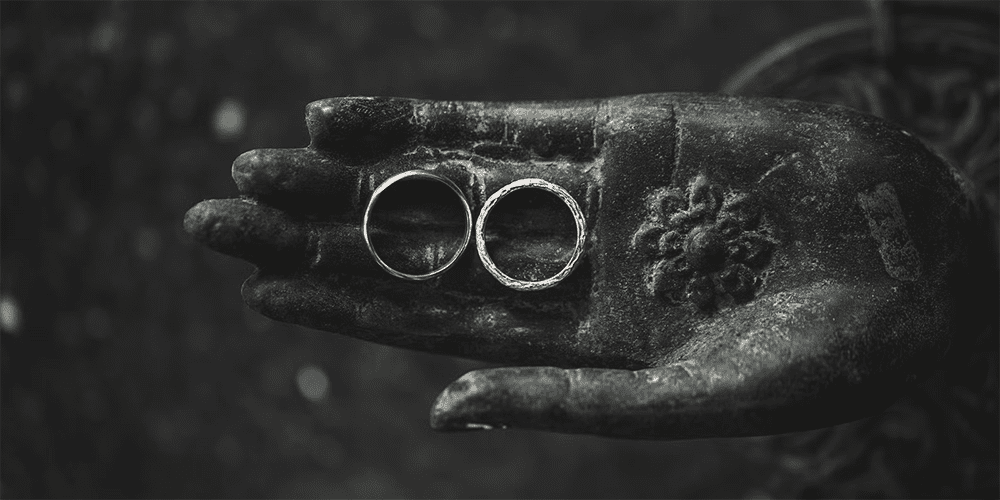
Archaeologists revealed new details in 2025 about a pair of 2,300-year-old gold rings uncovered at the City of David site in Jerusalem, shedding light on a rarely documented chapter of the city’s Early Hellenistic period. The first ring was originally discovered in 2024 during excavations beneath the foundations of a large building, while a second, nearly identical ring set with a red gemstone was unearthed less than a year later, with findings formally analyzed and updated in 2025 by the Israel Antiquities Authority.
Small enough to fit a child’s finger, the rings—alongside bronze earrings, a horned gold earring, and a decorated gold bead—are believed to have been intentionally buried as part of a coming-of-age ritual practiced by young women before marriage. Concealed for more than two millennia, the jewelry’s craftsmanship, ritual context, and evidence of foreign influence were revealed through ongoing research in 2025, offering rare insight into Jerusalem’s wealth, cultural openness, and evolving identity during the late third to early second century B.C.E.
Jadeite Royal Jewelry Revealed in the Tomb of Caracol’s First King
Ornaments of power reflect diplomacy, identity, and early Maya kingship
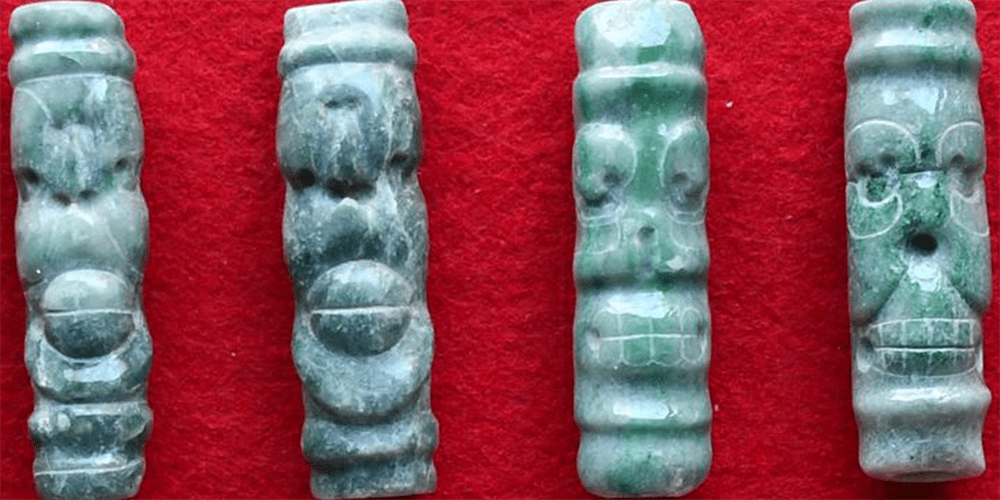
An extraordinary assemblage of jadeite jewelry recovered from the tomb of Te K’ab Chaak, the first ruler of the ancient Maya city of Caracol in Belize, has shed new light on early Maya kingship. While the site has been excavated for decades, the ruler’s tomb itself was identified during the 2025 field season by researchers from the University of Houston, marking the first clearly identifiable royal burial found at Caracol in more than forty years. Interred around A.D. 350, Te K’ab Chaak was buried with jadeite ornaments, including tubular beads depicting live and skeletal spider monkeys and a mosaic jadeite death mask, alongside other elite grave goods.
Sealed for nearly seventeen centuries, the jewelry’s craftsmanship, symbolism, and diplomatic significance—reflecting early high-level connections between the Maya world and central Mexico—were formally revealed and contextualized through ongoing analysis and public reporting in 2025, offering rare insight into royal adornment and power at the dawn of Caracol’s dynasty.
Roman-Era Gold Ring and Earrings Revealed at Hippos (Sussita)
Personal adornment highlights prosperity in a Decapolis city overlooking the Sea of Galilee
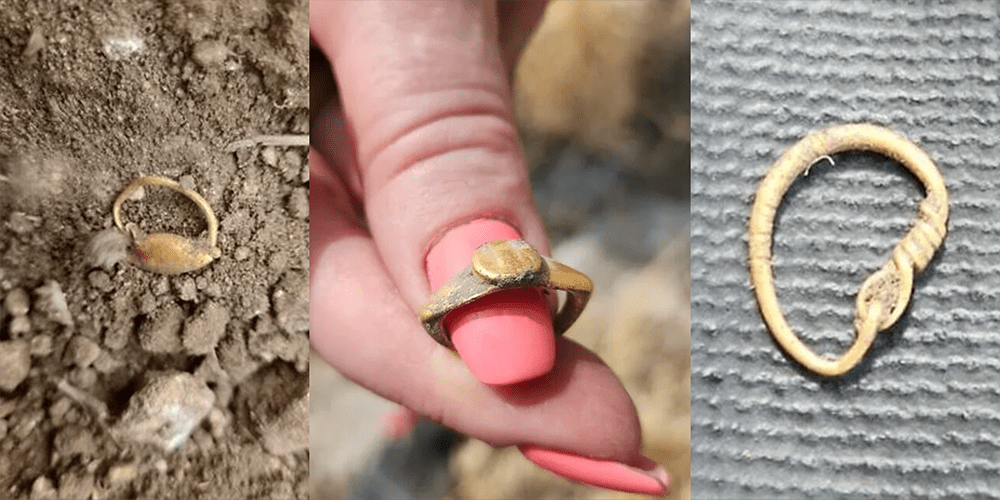
A Roman-era gold ring and pair of earrings uncovered at Hippos (Sussita) National Park are offering new insight into wealth and personal adornment in an ancient city overlooking the Sea of Galilee. The earrings were originally discovered earlier in the 2025 excavation season within the city’s Roman necropolis, while the small gold ring—likely belonging to a child—was uncovered days before the public announcement in July 2025 in a residential quarter of the ancient city. Dated stylistically to the 1st–3rd centuries C.E., the jewelry reflects the considerable wealth of Hippos during its Roman peak as part of the Decapolis alliance.
The artifacts’ craftsmanship and precious materials were formally revealed and contextualized in 2025 by the Israel Nature and Parks Authority, offering rare insight into personal adornment, burial practices, and urban affluence in a Galilean city likely visited during the time of Jesus.
Late Bronze Age Jewelry Hoard Revealed in Poland’s Kociewie Forest
Massive bronze ornaments reveal prehistoric craftsmanship hidden beneath the forest floor
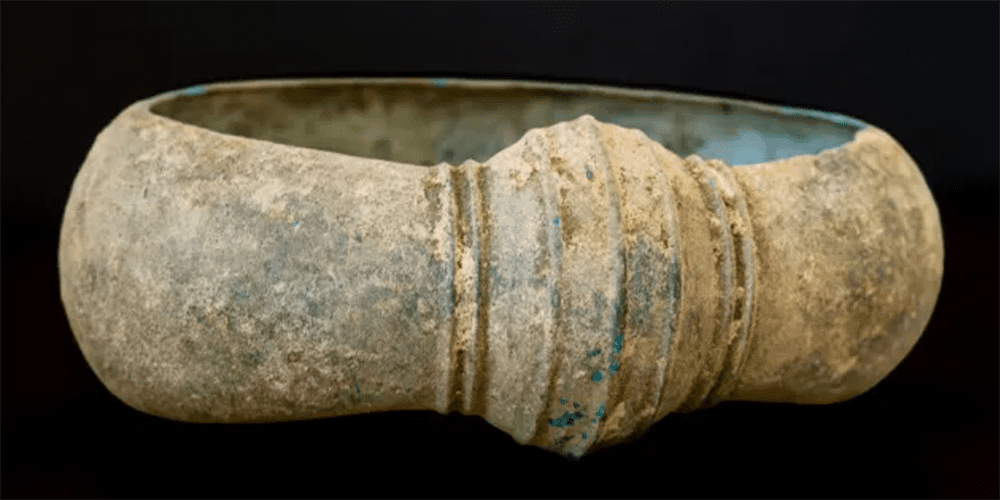
A nearly 3,000-year-old assemblage of Bronze Age jewelry uncovered in Poland’s Kociewie forest has emerged as a rare window into prehistoric adornment. The original discovery occurred in August 2025, when a metal detectorist from the Kociewskie Poszukiwacze group unearthed a massive, well-preserved bronze bracelet weighing over half a pound, buried roughly eight inches below the forest floor.
Follow-up searches at the same location led to the recovery of two additional fibulae (brooches) and another piece of unidentified jewelry, all dated to the Late Bronze Age between the 9th and 8th centuries B.C. After being hidden for millennia, the jewelry’s age, craftsmanship, and cultural significance were formally revealed and documented later in 2025 after being turned over to the Pomeranian Voivodeship Conservator of Monuments, offering rare insight into personal adornment and metalworking traditions in prehistoric northern Poland.
Rare Pictish Ring Revealed at Burghead in Scotland
A glistening gemstone offers rare insight into a vanished Dark Age kingdom
A rare Pictish ring uncovered near the Scottish coast at Burghead is offering new insight into one of Britain’s most enigmatic early medieval kingdoms. The original discovery occurred during excavations in 2025, when a retired volunteer assisting the dig unearthed the glistening ring while cleaning the floor of a structure dating between roughly 500 and 1000 C.E.
Set with what appears to be a garnet and remarkably well preserved, the ring is one of only a handful of known Pictish rings, most of which are typically found in deliberate hoards rather than settlement contexts. Buried for a millennium, the ring’s rarity, craftsmanship, and historical implications were formally revealed and are now being studied in 2025 at the National Museum of Scotland, offering rare insight into the material culture of a powerful society that vanished from the historical record by the end of the first millennium.
Prehistoric Shell Jewelry Workshop Revealed at Saint-Césaire, France
Europe’s earliest known ornament-making site reshapes understanding of symbolic behavior
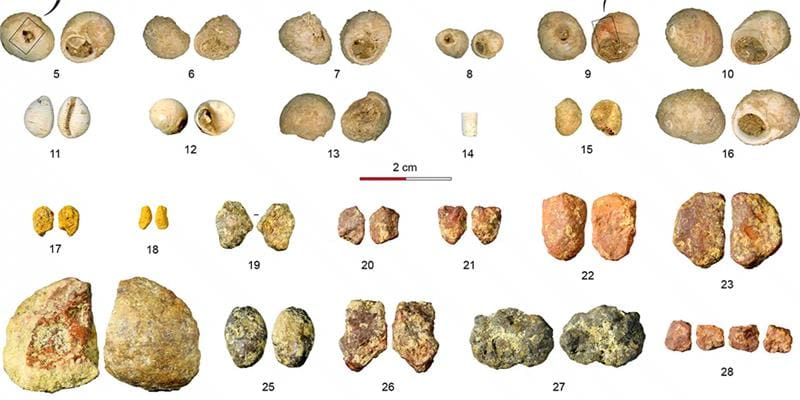
A shell jewelry workshop dating back approximately 42,000 years has emerged as one of Europe’s earliest known ornament-making sites at La Roche-à-Pierrot in Saint-Césaire, southwestern France. While the site itself has been under investigation since 1976, the jewelry-related evidence—pierced shells, unfinished ornaments, and pigment residues—was newly analyzed and formally revealed through updated research published in 2025 by teams including the French National Centre for Scientific Research.
The shells, sourced from the Atlantic coast nearly 100 kilometers away, along with red and yellow pigments transported from inland regions, indicate intentional ornament production and long-distance movement or exchange. Though buried for tens of thousands of years, the workshop’s function, symbolism, and cultural importance were clarified in 2025, offering rare insight into some of Europe’s earliest known jewelry-making traditions during the transitional Châtelperronian period.
Byzantine Gold Jewelry and Coin Hoard Revealed at Hippos near the Sea of Galilee
Pearl-inlaid earrings and rare gold coins testify to elite life in a Christian city
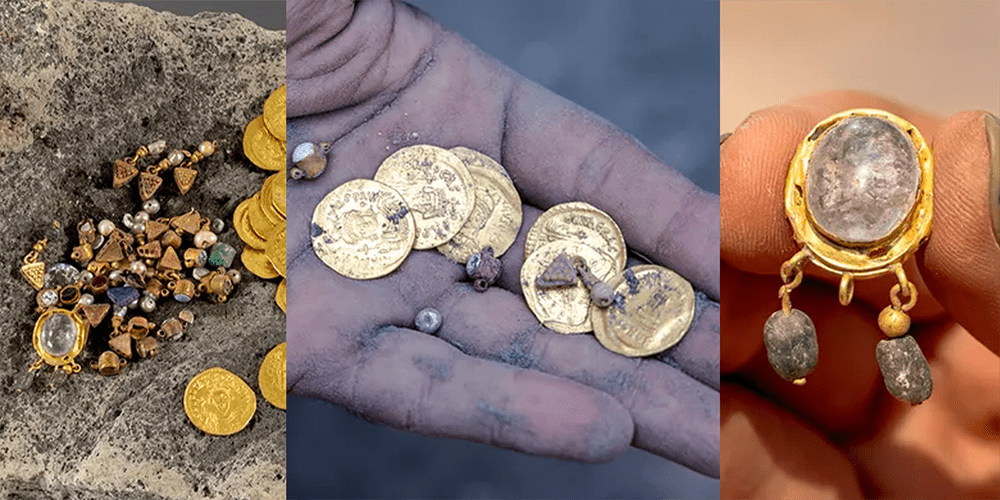
An extraordinary cache of Byzantine-era jewelry and gold coins uncovered at the ruins of Hippos is offering new insight into elite life in a historic Christian city overlooking the Sea of Galilee. The original discovery occurred in July 2025, when a metal detectorist working with the excavation team accidentally exposed a hidden hoard containing dozens of pearl-inlaid gold earring fragments alongside 97 gold coins dating to the Byzantine era.
The jewelry, combining pearls, semi-precious stones, and glass, reflects elite craftsmanship from the 6th to early 7th centuries C.E., while the coins include a remarkably rare tremissis—only the second of its kind ever found in Israel. Despite being concealed for more than 1,400 years, the jewelry’s condition, artistry, and historical context were formally revealed and documented in October 2025 by researchers from the University of Haifa, offering rare insight into wealth, adornment, and daily life in one of the region’s most affluent Byzantine Christian centers.
Avar-Period Jewelry Revealed in High-Status Warrior Burial in Hungary
Silver and gold adornments mark rank and identity in an early medieval warrior elite
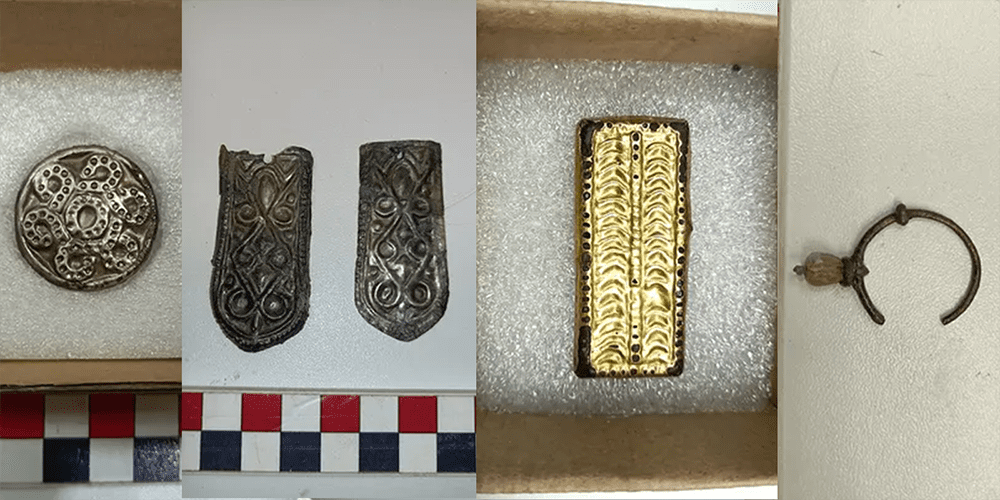
Rare jewelry recovered from the tomb of a high-ranking Avar-period warrior in Hungary is offering new insight into early medieval elite identity. The burial was originally discovered in August 2025 near Székesfehérvár, but its significance—including personal adornments—was formally revealed and documented later that year by the King Saint Stephen Museum.
Dating to between 670 and 690 C.E., the grave contained silver belt ornaments, gilded braid rings, and an earring, items that signaled elite status within Avar society and accompanied the warrior’s rare saber. Buried for more than 1,300 years, the jewelry’s craftsmanship, placement, and association with high rank were clarified through 2025 analysis, offering rare insight into personal adornment, hierarchy, and identity among the Avars of the early medieval Carpathian Basin.
Honoring the Past, Preserving the Future
Preserving the Stories That Endure with My Jewelry Repair
From Neolithic pendants and royal jadeite masks to gold rings worn by children and warriors alike, the jewelry revealed in 2025 reminds us that adornment has always been deeply personal, symbolic, and enduring. These discoveries—some unearthed for the first time, others newly understood—highlight how jewelry carries stories of identity, belief, status, and craftsmanship across centuries. As caretakers of these timeless traditions today, the way we preserve our own jewelry and watches ensures their stories continue into the future.
At My Jewelry Repair, our Master Jewelers and Certified Watchmakers are dedicated to safeguarding the beauty, integrity, and meaning of the pieces entrusted to us—whether restoring an ancient-inspired heirloom, reviving a treasured family piece, or ensuring a cherished timepiece is ready to be passed down for generations to come.

Resources:
- ¹7,600-year-old Pendant Made of Nephrite Discovered in Serbia via Miami Herald Information and Photos: https://www.miamiherald.com/
- ²2,500-year-old Dynasty 26 Jewelry Hoard at Karnak Temple via Egyptian Streets Information and Photos: https://egyptianstreets.com/
- ³3,800-year-old Scarab Amulet Found by Toddler in Israel via CBS News Information and Photos: ttps://www.cbsnews.com/
- ⁴Centuries Old Decian Silver Jewelry Hoard in Transylvania in CBS News Information and Photos: https://www.cbsnews.com/
- ⁵Early Hellenistic Gold Rings Found at Jerusalem City of David via CNN Information and Photos: https://www.cnn.com/
- ⁶Four Jadeite Tubular Beads Showing Live and Dead Spider Monkeys in Tomb of Caracol’s First King via University of Houston Information and Photos: https://www.uh.edu/
- ⁷Roman-Era Gold Earrings and Ring Jewelry Found at Hippos via Times of Israel Information and Photos: https://www.timesofisrael.com/
- ⁸Late Bronze Age Bracelet Found in Poland’s Kociewie Forest via Miami Herald Information and Photos: https://www.miamiherald.com/
- ⁹1,000-year-old Pictish Ring Found at Burghead in Scotland via Popular Mechanics Information and Photos: https://www.popularmechanics.com/
- ¹⁰42,000-year-old Shell Jewelry Discovered in France via Greek Reporter Information and Photos: https://greekreporter.com/
- ¹¹1,400-year-old Hoard of Gold Coins and Jewelry Found Near Sea of Galilee via FOX News Information and Photos: https://www.foxnews.com/
- ¹²7th Century Jewelry of Warrior From Tomb in Hungary via FOX News Information and Photos: https://www.foxnews.com/
Interested in Restoring Your Precious Piece?





Our team has gemologists certified by

We are proud members of the